How to Choose a Kitchen Sink
It can be said that the kitchen revolves around the sink. Prep work, cooking, and clean up all involve the sink in one way or another. Having a sink that best matches your needs and lifestyle is a critical factor in have a truly functional and efficient kitchen. Before choosing your perfect kitchen sink, first think about how you use the sink and then consider the various features and characteristics that your sink should have.
Here’s what to consider when choosing a new kitchen sink…
What size sink is right for you?
Size
In additional to making sure that the size of the individual bowls meet your needs, also consider the overall size of the sink. A larger sink provide more space for washing dishes but also takes away counter space which is especially critical in smaller kitchens. Also make sure your new sink will fit the existing cabinets. Some larger sinks might require custom sized cabinets.
Number of Bowls
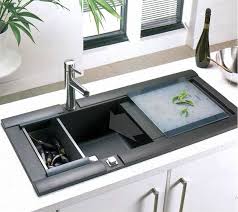
How do you use your kitchen sink? Do you wash a lot of baking pans? If so, consider a large single bowl sink or a dual level sink with enough room to lay the pans down to soak. Most dual level sinks feature an oversized bowl to wash or soak things, with another smaller sink for rinsing or a garbage disposal. Make sure both bowls are large enough to meet your kitchen needs. If you share kitchen responsibilities, consider two sinks. One can be used for food prep and the other for clean-up. An island or bar sink, usually a smaller single bowl sink, is the best option.
Setting the Standard
The average kitchen sink measures 22-by-30 inches. While the front-to-back dimensions of the sink remain standard due to the size of most countertops and cabinets, the width of different types of sinks can vary dramatically. But some homeowners opt for deeper countertops measuring 30 inches or more, which can accommodate a larger sink than the standard countertop. Single bowl sinks come in sizes as wide as 33 inches, while double-bowl units can measure 48 inches.Triple bowl units may be as wide as 60 inches. Narrow trough sinks, designed for easy food preparation, generally measure 8 to 14 inches front-to-back and can stretch 50 inches or wider.
Going Deep
Most kitchen sinks vary from 8 to 10 inches in depth. While a sink with a 10 inch depth makes it easier to soak pots and pans, deeper sinks can be more uncomfortable for shorter family members to use. Shallow sinks allow for easier reaching and prep work. Some prep sinks come with a depth of just a few inches, and are often installed alongside a standard sink for washing dishes or cleaning vegetables. When choosing sink depth, keep in mind that under-mount sinks sit about 2 inches lower than drop-in sinks, which can make the bottom of the sink more difficult to reach.
Choosing a Sink
For New construction:
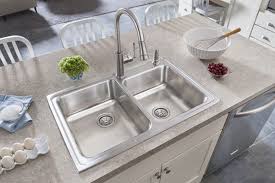
“New construction” means that you are completely gutting your kitchen and replacing both your cabinets and countertops. If you are doing this, you have more freedom to choose a sink of any size. The most common sink sizes are 24, 30, and 33 inches.
Smaller homes and condos will likely go with the 24-inch size, small yet functional enough to wash pots and pans. Common 24-inch sink shapes are a square and D-bowl. Sinks 24 inches wide must sit in at least a 27-inch sink base cabinet.
The most common sink size is approximately 30 inches. In a 30-inch width, you will start to see a wider variety of shapes: single bowl square, single bowl orca, and double bowl. Sinks that are 30 inches wide must sit in a base cabinet of at least 33 inches. The most common base cabinet sizes for new construction is typically 33-36 inches.
Larger kitchens can accommodate 33-inch and 36-inch sinks. These sinks come in a single bowl or double bowl. If you have a lot of space for a large sink, you might want to also consider a prep or bar sink to cater to point-of-use needs.
If You’re Keeping Your Cabinets:
If you are choosing a sink yet keeping your cabinets, you will need to pay close attention to the size of the base cabinet. Do not just simply measure your existing sink. Measuring your base cabinet will determine how big your new sink can be.
Cleaning Considerations when Buying a Kitchen Sink
Nothing is more frustrating when you’re washing dishes than finally clearing out the sink only to find that the sink itself is now completely filthy. Some sinks make this type of cleaning much harder than others, which can lead to some serious health concerns and threaten the lifespan of your sink. Read on to find out what you should look for in a new kitchen sink when it comes to making cleaning it easier.
Materials Used
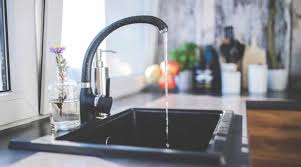
This is definitely going to be the biggest thing that affects how easy it is for you to clean your sink. Some materials are very porous, which means that they have tiny microscopic holes in them that can soak up grease and colors from foods and other liquids and hold on to them. It might end up causing some unsightly stains, or it could create a buildup of germs and bacteria. Either way, it’s going to make cleaning a serious pain.
Stainless steel sinks are excellent at fighting off stains and don’t hold on to food debris, which makes it much easier to keep your kitchen sink sanitary. If you decide to buy a sink made out of a different material, look for one that specifically states that it is made out of a nonporous substance.
Special Coating
Most of the time, you’re going to encounter details about special coatings to prevent stains or scratches on metal sinks. This is because metal is much easier to treat with these processes, and it’s able to keep the effects of the treatments for a very long time. Some other types of sinks can also have special coatings, but they may not last the entire life of the sink.
You might see manufacturers refer to a satin finishing process that helps prevents scratches, which is also important in keeping your sink clean because scratches can quickly become reservoirs for germs. In metal sinks, scratches can also start to rust over time when exposed to water, which will definitely make your sink hard to clean and potentially even break.
Pointers and FAQs:
It is impossible to retrofit a sink. Once you decide on a sink, you are married to your sink until you redo your kitchen counters. Therefore, do not skimp on the sink! If someone is “giving you” a new sink, be wary of this. Make sure you see your sink in person before you commit to buying it. Your countertops will be templated to fit the sink you opt for and there is no going back.
Not all sinks are made the same way. Stainless is measured by gauge. The lower the gauge, the thicker the sink. Sink gauge is measured between 15-20 gauge.
Technically, the gauge is the “number of stainless sheets that can fit into one inch of stainless”. Therefore dividing 1’’ of stainless by 15 will yield a thicker sheet than dividing 1’’ of stainless by 20. Generally speaking, thick stainless sinks are about 16 gauge.
Fireclay and stone sinks are varied immensely in terms of quality. The white apron-front sinks have become a huge trend, but they vary in building material and thickness.