Your Definitive Mold Clean Up Guide
Mold illness can be sneaky and symptoms may seemingly come from nowhere. Mold illness symptoms can range from low level and feel like a bout of flu you can’t shake to debilitating fatigue that makes getting through the day tough.
Targeting the Underlying Cause of Mold
Mold thrives in moist and warm conditions. When these conditions combine with a suitable food source, mold can spread very quickly, often in unseen places. Mold easily lives on paper, cardboard, wood, fabric, carpet, drywall, and many other common building materials.
The underlying causes of mold include:
Moisture: Ensure any water pipe or roof leaks are fixed. If the property has a history of flooding, you need to evaluate the risk of it happening again and maybe even consider a house move. Extensive flooding increases the risk of mold contamination. I recommend removing wet carpet from your property as soon as possible, as they encourage not only the growth of mold, but also bacteria.
Holes and gaps in the walls: Look out for cracks in walls or windows – they may be letting mold in through your external walls.
Condensation: If the warm air inside your property hits a colder surface, like your windows, it causes interior condensation. This often leads to mold eating away at wooden window frames. To specifically target your windowsills, moisture eliminator products are useful. However, if you suspect mold elsewhere in your house, they won’t be effective.
Air Conditioning units: Your air conditioning, heating, and ventilation unit needs regular maintenance and cleaning to ensure that it is not the culprit. It could be circulating fungus spores around the house. Get an expert to look into it and consider getting a HEPA air scrubber to clean the air.
Humidity: I advise you purchase one or more dehumidifier units, depending on the size of your home. A dehumidifier ensures you can keep the humidity of your property around the 50% mark – mold finds it harder to multiply in drier air.
Removing Mold From Your Carpet
Mold loves fabric, making most furniture a potential hub for mold. If you are cleaning up after a large leak, I recommend removing the carpet completely. In mold infestation cases where the carpet has not gotten wet, it’s a good idea to buy a high efficiency particulate arrestance (HEPA) vacuum cleaner to clean your carpet.
When using your true HEPA vacuum cleaner:
Make sure you vacuum from every angle. When vacuuming it’s easy to get into the habit of pushing the machine across your carpet in the same direction. Many modern vacuum cleaners have a more flexible design, meant to get into difficult corners or underneath furniture. Use it from every direction possible to remove as many mold spores as possible.
Empty your vacuum cleaner outside. If your vacuum model is bagless, use a disposable wipe to clean out the canister fully. Avoid breathing in the dust by wearing a N-95 respirator. If your vacuum cleaner uses bags, ensure you wear protective gloves, respirator, and clothing as you do so to avoid carrying the spores back into your home.
As the dirt, dust and mold spores in the fibers may have been accumulating for years, don’t be disheartened if you don’t see an immediate improvement in the state of the carpet or your health. It may take several long sessions of vacuuming before you start to feel the benefits.

Mold
The Environmental Health Epidemiology Bureau (EHEB) provides general information about the health effects of mold and how to clean up mold.
EHEB does not conduct mold testing, home inspections, or resolution for disputes between landlords and tenants.
New Mexico does not have laws or state agencies that regulate mold or have jurisdiction to enforce abatement. No federal indoor air quality standards exist for mold.
Mold and mold spores occur naturally and are present both indoors and outdoors. Excess moisture can cause mold to grow indoors.
Information on this web page provides information on cleaning and controlling mold growth. Fact sheets, tips, and guides are available for download.
What is mold?
Excess moisture can cause mold to grow indoors and health effects from contact with mold are possible.
Controlling moisture by fixing leaks, having adequate ventilation and cleaning up after floods or other water damage is essential to prevent mold growth.
The key to mold control is moisture control.
If mold is a problem in your home, you should clean up the mold promptly and fix the water problem.
It is important to dry water-damaged areas and items within 24-48 hours to prevent mold growth.
What are the health effects of mold?
Everyone is exposed to some amount of mold every day. Not everyone is mold sensitive. Continual exposure to active mold spores in the home, workplace or outdoors can, over time, cause or worsen health effects.
What are the health symptoms of mold exposure?
According to a 2004 Institutes of Medicine Report, Damp Indoor Spaces and Health, sufficient evidence exists only to link mold exposure to upper respiratory (nose and throat) symptoms, coughing, wheezing and asthma symptoms among sensitized individuals.

Mold Inspections
Avoiding Mold Growth in the Cold Room
Back in the day we needed a cooler humid room for hanging cured meats, storing preserves and letting wine ferment. Many years past and there are few who use the cold room as intended as we have many new conveniences such as the deli counter for our cured meats. Not only have we outgrown the cold room but many have forgotten its intended purpose and re-purpose the room in ways it was never intended for.
Cold rooms started with dirt floors but now we use concrete, the room is a six sided concrete box with a door, typically located under the front porch or back deck and some have a small vent to the outdoors. The ceiling of the cold room is typically the front concrete porch. Concrete by its very nature will transfer moisture from one side to the other making the cold room a nightmare to waterproof therefore a room not meant for re-purposing.
The cold room gets very cold in the winter months and as such should have a properly insulated door. The door should be weather stripped on all four sides to prevent heat getting into the cold room and the cold from entering your basement. When heat enters the cold room the humidity will condensate on the cold ceiling, it will freeze then start dripping causing cold room flooding.
The Cold Room can be a Mold Producing Monster
Many new home owners use the cold rooms for storage unaware that the cold room can be a mold producing monster. To prevent mold growth never store anything organic and porous in the cold room.
The other common issue with the cold room was a function of its construction. When the contractors needed to pour the front porch concrete which was also the cold room ceiling they used wood to form the floor. After the concrete had cured they should have removed the wooden forming boards but few did. If you have wood at the ceiling of your cold room it will most likely require removal. It is an organic material that mold will grow on.
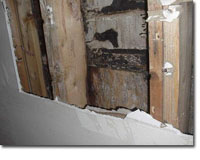
Reasons To Get A Mold Inspection
A General Home Inspection is NOT a Mold Inspection
Most general home inspectors are not mold experts, some even avoid mold inspections. Home inspectors have a vast knowledge. But if you have mold in your home a general inspection will not be able to determine the presence of mold.
Mold Inspection is Also Moisture Reading
A mold inspection is a good indicator of moisture infiltration within your home. Moisture can be assessed by mold specific tools such as a moisture meter. A moisture meter is placed on the walls of a home to test the humidity of possible water leaks. Water leaks are great indicators of mold soon to be discovered.
Mold Remediation and Water Damage Can be Very Expensive
You don’t want to start off paying thousands of dollars on a home you just bought. This is something the property manager should take care of before you purchase a home. Paying for a mold inspection may save you thousands and thousands of dollars. Unfortunately many home insurance companies do not include mold as part of their protection package.
Mold can be Undetected by the Human Eye
Not all mold is visible to the human eye. This is why it is important to have mold specific tools to assess the presence of mold. Mold can also be hidden behind walls, and will only be visible when things get out of control.
Exposure to Mold may cause health problems
Lastly, mold may cause health effects. Making it all the more important to have a mold inspection.
Mold Information
What is Mold?
Molds are fungi. Molds grow throughout the natural and built environment. Tiny particles of mold are present in indoor and outdoor air. In nature, molds help break down dead materials and can be found growing on soil, foods, plant matter, and other items. Molds produce microscopic cells called “spores” which are very tiny and spread easily through the air. Live spores act like seeds, forming new mold growths (colonies) when they find the right conditions.
What does mold need to grow?
Mold only needs a few simple things to grow and multiply:
Moisture
Nutrients
Suitable place to grow
Of these, controlling excess moisture is the key to preventing and stopping indoor mold growth.
Should I be concerned about mold in my home?
Mold should not be permitted to grow and multiply indoors. When this happens, health problems can occur and building materials, goods and furnishings may be damaged.
Can mold make me and my family sick?
Mold can affect the health of people who are exposed to it. People are mainly exposed to mold by breathing spores or other tiny fragments. People can also be exposed through skin contact with mold contaminants (for example, by touching moldy surfaces) and by swallowing it.
What symptoms might I see?
The most common health problems caused by indoor mold are allergy symptoms. Although other and more serious problems can occur, people exposed to mold commonly report problems such as:
Nasal and sinus congestion
Cough
Wheeze/breathing difficulties
Sore throat
Skin and eye irritation
Upper respiratory infections (including sinus)